
Showing Posts From
Branch circuit
Branch-circuit posts dig into everyday circuit design — receptacle counts, breaker selection, shared neutrals, and continuous-load rules that change conductor and OCPD size.
Use them when quoting residential and light commercial circuit work that must stay code-aware and priceable.
Guides in this tag
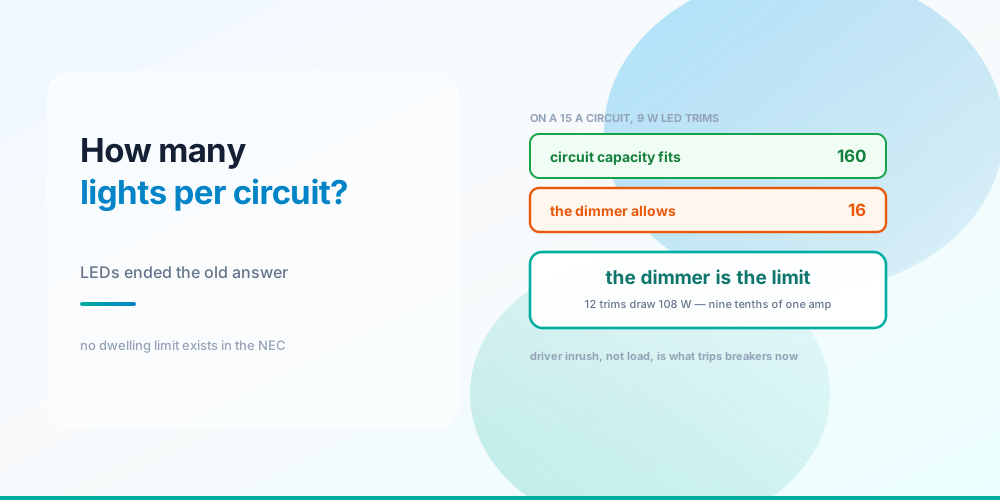
- How Many Lights Can You Put on One Circuit?
A 15 A circuit holds about 160 nine-watt LED trims. The dimmer allows 16. LEDs moved the binding constraint off the breaker entirely - and in a dwelling the NEC sets no limit at all.
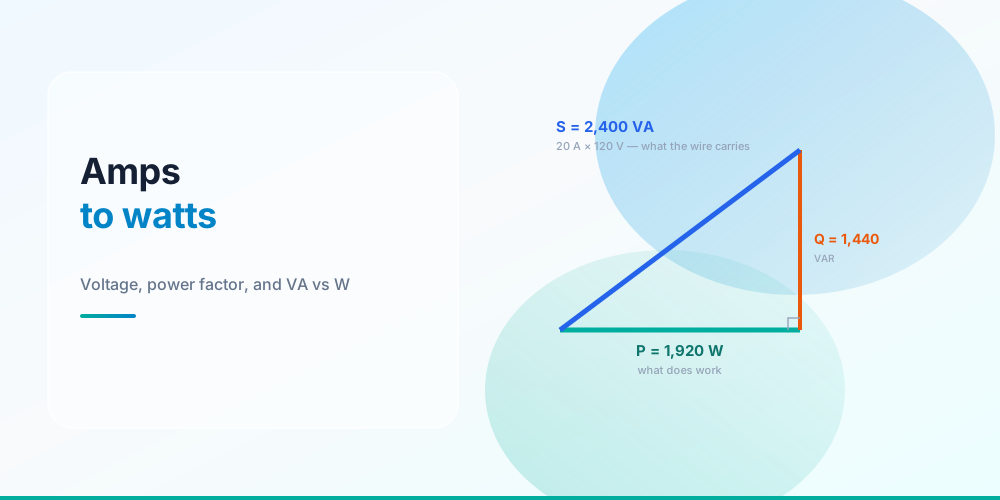
- Amps to Watts: Conversion With Voltage and Power Factor
Watts = volts × amps × power factor. But amps × volts always gives volt-amperes, and only unity power factor makes them equal - plus why a 20 A breaker is 2,400 W on paper and 1,920 W in practice.
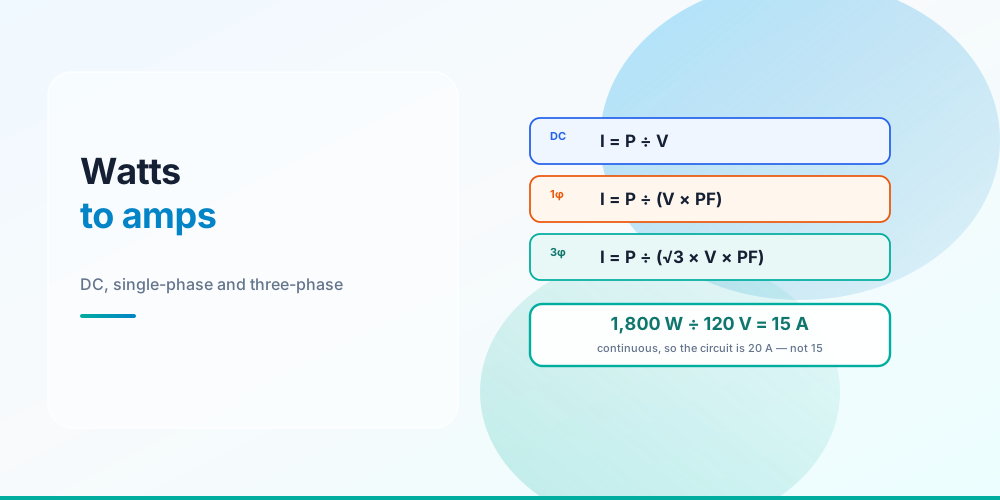
- Watts to Amps: The Formula for DC, Single-Phase, and Three-Phase
Amps = watts ÷ volts on DC, ÷ (volts × power factor) on single-phase, ÷ (1.732 × volts × PF) on three-phase. Plus the part that actually matters: why the amps you get are not the breaker size.
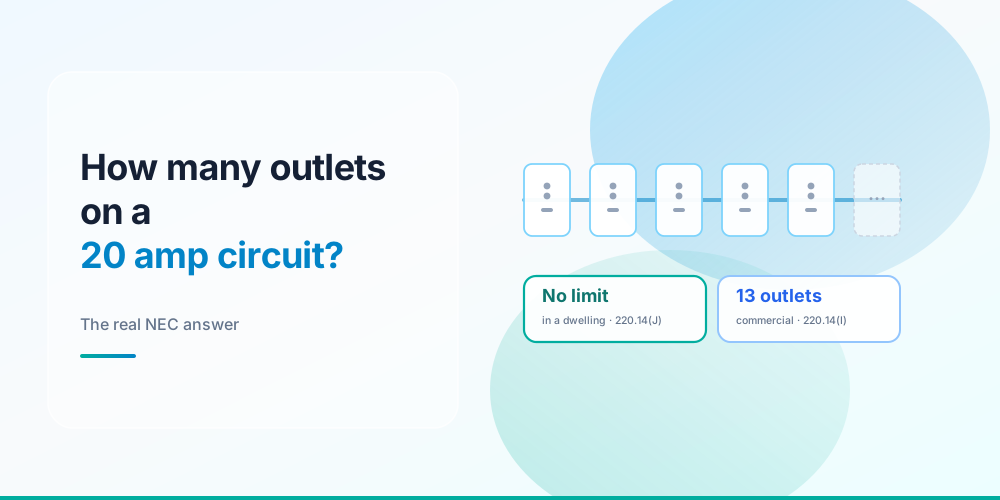
- How Many Outlets on a 20 Amp Circuit? The Real NEC Answer
In a dwelling the NEC sets no limit on receptacles per circuit - 220.14(J) already counts them. In commercial work it's 180 VA each, so 13 on a 20 amp circuit. Plus the load limits that actually apply and the 8–10 working convention.
- 15 Amp vs 20 Amp Circuit: Wire, Outlets, and When to Use Each
The difference is the conductor - 14 AWG versus 12 AWG - not the breaker. Which receptacles are legal on each, where the NEC requires 20 amps, why you can't upgrade with a breaker swap, and how the usable load compares.
Related resources
- 04 Aug, 2026
How Many Lights Can You Put on One Circuit?
A 15 A circuit holds about 160 nine-watt LED trims. The dimmer allows 16. LEDs moved the binding constraint off the breaker entirely - and in a dwelling the NEC sets no limit at all.
- 04 Aug, 2026
Amps to Watts: Conversion With Voltage and Power Factor
Watts = volts × amps × power factor. But amps × volts always gives volt-amperes, and only unity power factor makes them equal - plus why a 20 A breaker is 2,400 W on paper and 1,920 W in practice.
- 04 Aug, 2026
Watts to Amps: The Formula for DC, Single-Phase, and Three-Phase
Amps = watts ÷ volts on DC, ÷ (volts × power factor) on single-phase, ÷ (1.732 × volts × PF) on three-phase. Plus the part that actually matters: why the amps you get are not the breaker size.
- 03 Aug, 2026
How Many Outlets on a 20 Amp Circuit? The Real NEC Answer
In a dwelling the NEC sets no limit on receptacles per circuit - 220.14(J) already counts them. In commercial work it's 180 VA each, so 13 on a 20 amp circuit. Plus the load limits that actually apply and the 8–10 working convention.
- 03 Aug, 2026
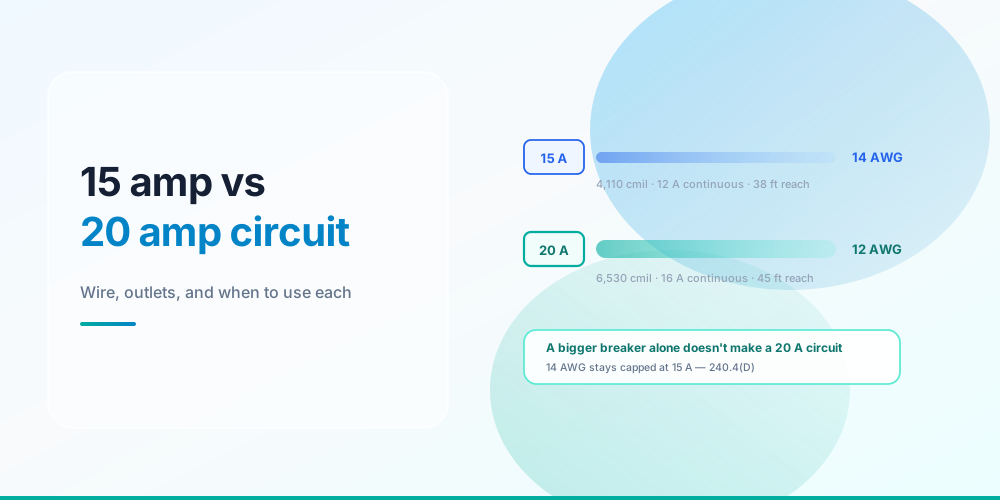
15 Amp vs 20 Amp Circuit: Wire, Outlets, and When to Use Each
The difference is the conductor - 14 AWG versus 12 AWG - not the breaker. Which receptacles are legal on each, where the NEC requires 20 amps, why you can't upgrade with a breaker swap, and how the usable load compares.
Frequently asked questions
Common questions about Branch circuit guides on the TradesQuote blog.
What will I find under Branch circuit?+
This tag lists 5 published guides tagged or categorized as Branch circuit. Topics typically include sizing, cost estimating, diagnostics, and practical contractor workflows tied to that subject.
Are these articles a substitute for code or engineered design?+
No. TradesQuote guides explain concepts and estimating shortcuts so you can work faster and communicate clearly. Always follow applicable codes, manufacturer instructions, and professional engineering requirements for the job.
How do these pages relate to TradesQuote tools?+
Many articles link to free HVAC or electrical calculators and to TradesQuote estimating features. Use the guides to understand the topic, then use the tools to produce numbers for proposals and field checks.