
TradesQuote Blog

- 03 Sep, 2026
Low Water Pressure in a House: Static vs Flowing, and What Each Tells You
One gauge reading diagnoses nothing. Static pressure tells you what the street gives you; flowing pressure tells you what the house destroys. The two readings together name the fault — with the friction numbers worked through.
- 03 Sep, 2026
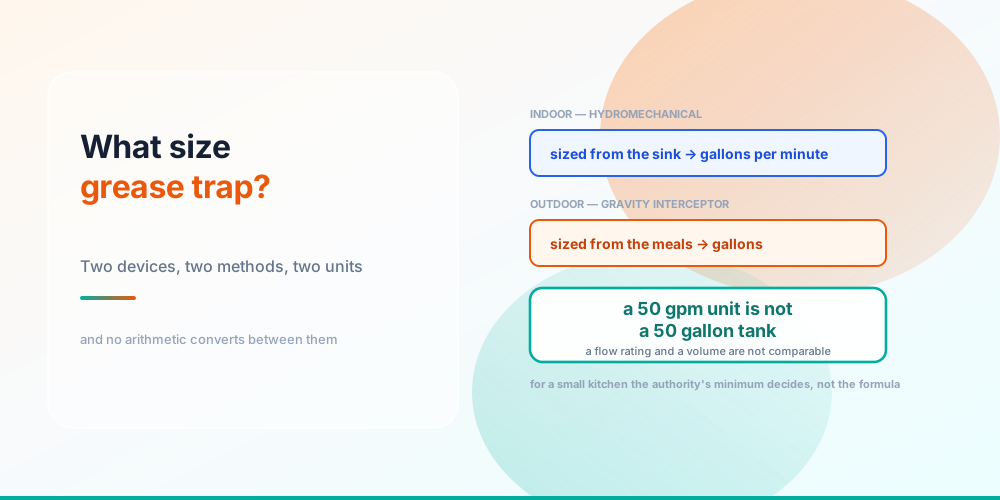
What Size Grease Trap Do I Need? Two Devices, Two Methods
A grease trap is rated in gallons per minute and a grease interceptor in gallons — and the two are sized by methods that share no inputs. How each one works, with the sink volumes and meal counts worked through.

- 03 Sep, 2026
What Size Septic Tank Do I Need? Bedrooms, Soil, and Why Both Matter
Bedroom count picks the tank. The ground picks the leach field — and the ground swings it five-fold on an identical house. How the two independent calculations work, and why a perc test is not optional.
- 02 Sep, 2026
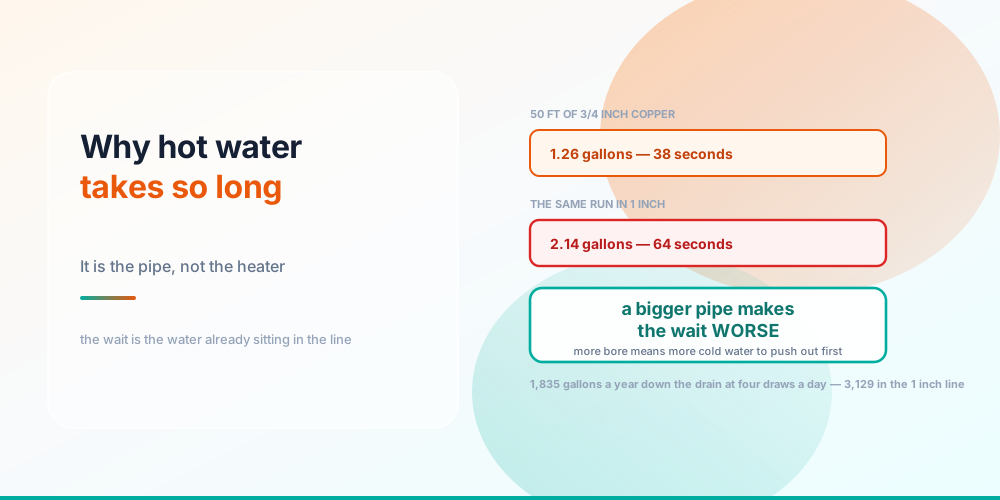
Why Hot Water Takes So Long — and Why a Bigger Pipe Makes It Worse
The wait is the water already in the pipe, not the heater. 50 ft of 3/4 inch copper is 38 seconds; the same run in 1 inch is 64. Upsizing the hot line is the one fix that backfires.
- 02 Sep, 2026
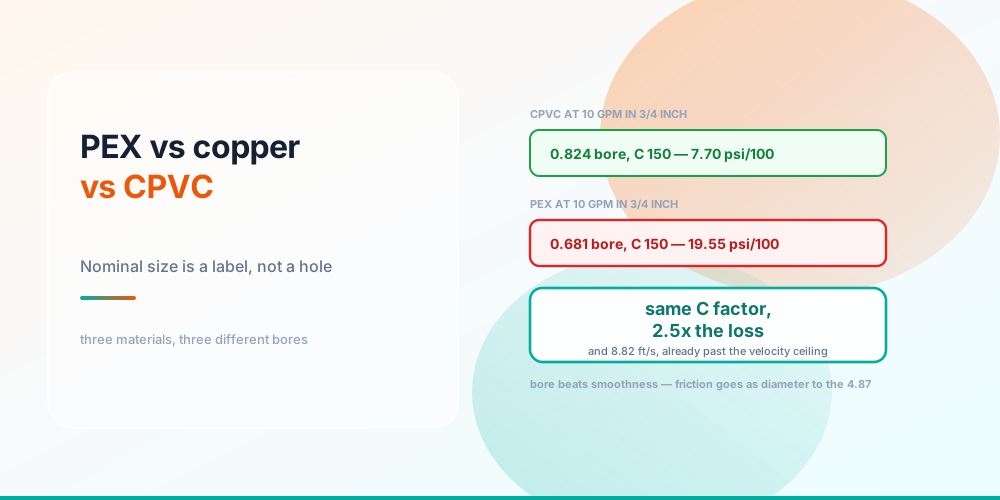
PEX vs Copper vs CPVC: Bore, Cost, and Why PEX Needs a Size Up
PEX and CPVC share a Hazen-Williams C of 150. At 10 gpm in nominal 3/4 inch, CPVC loses 7.70 psi per 100 ft and PEX loses 19.55 — because nominal size is a label, not a hole.
- 02 Sep, 2026
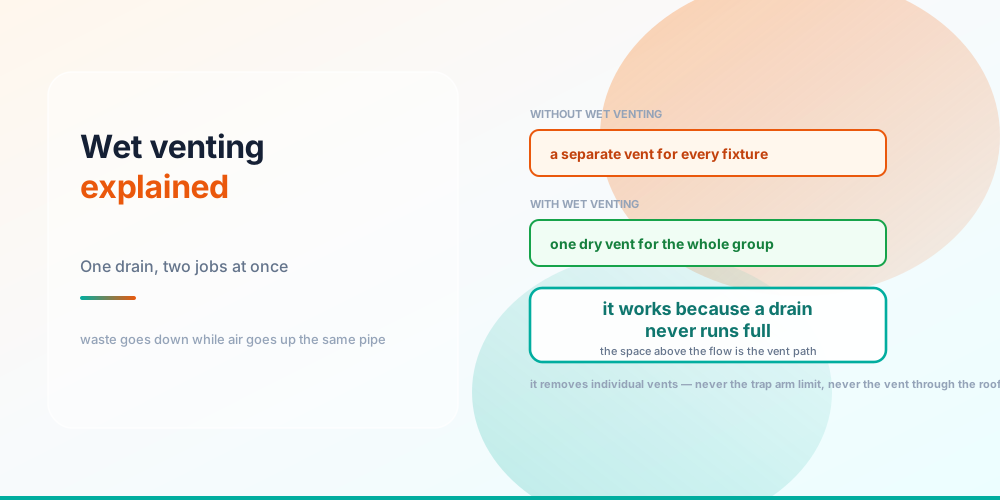
Wet Venting Explained: When One Drain Legally Vents Another
A drain never runs full, so the space above the flow is a vent path. How IPC 912 lets one dry vent serve a whole bathroom group — and the four things wet venting never excuses you from.
- 02 Sep, 2026
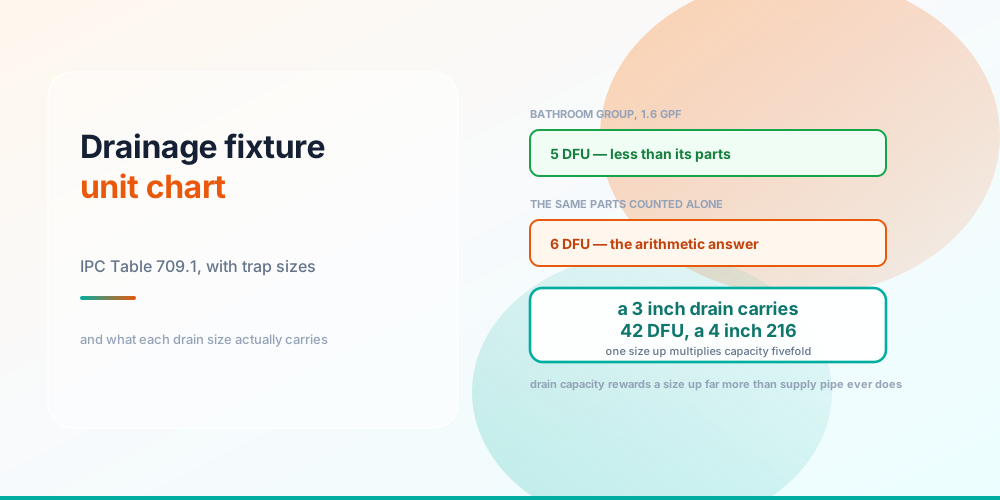
Drainage Fixture Unit Chart: Table 709.1 With the Trap Sizes
The full IPC Table 709.1 values, residential and commercial, with the minimum trap each fixture takes. Plus what your DFU total actually buys: a 3 inch drain carries 42, a 4 inch carries 216.
- 02 Sep, 2026
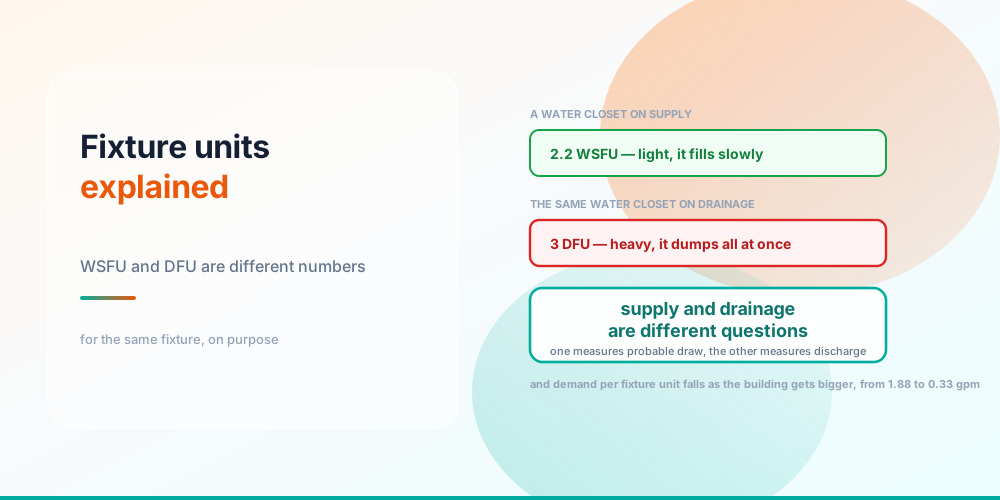
Fixture Units Explained: WSFU, DFU, and Why They Are Different Numbers
A water closet is 2.2 supply fixture units and 3 drainage fixture units. Not a typo — they measure different physical loads, and confusing them is how a system gets sized wrong.
- 02 Sep, 2026
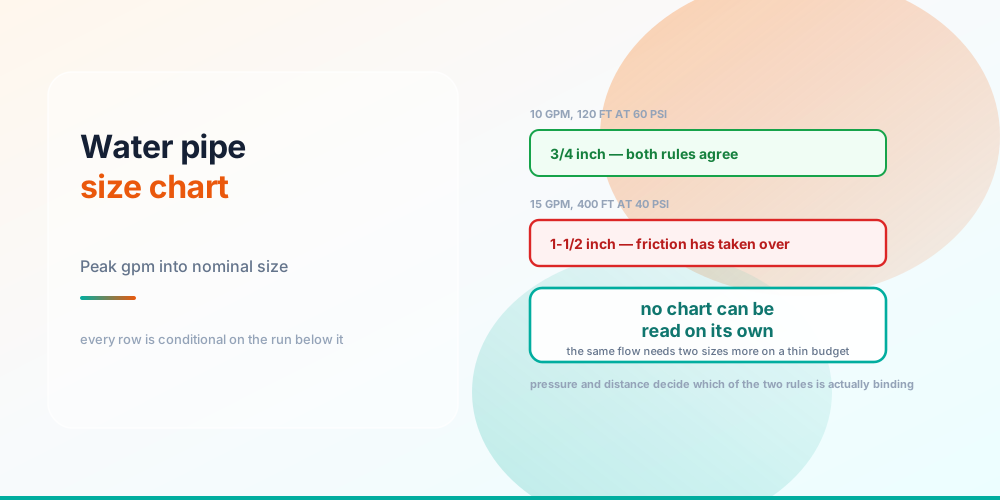
Water Pipe Size Chart: GPM and Fixture Units to Nominal Size
A pipe size chart that shows its working. 10 gpm is 3/4 inch at 60 psi over 120 ft — and 15 gpm needs 1-1/2 inch at 40 psi over 400 ft. Why every row is conditional.
- 01 Sep, 2026
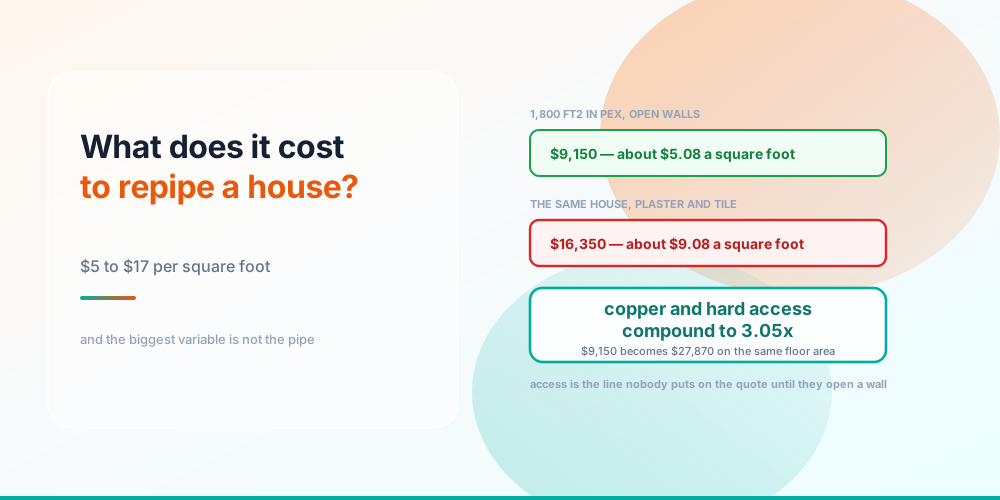
How Much Does It Cost to Repipe a House? The Variable Nobody Quotes
$9,150 in PEX with open walls. $27,870 in copper behind plaster and tile. Same 1,800 ft2 house — because material and access compound rather than add, and access is the line nobody puts on the quote.
- 01 Sep, 2026
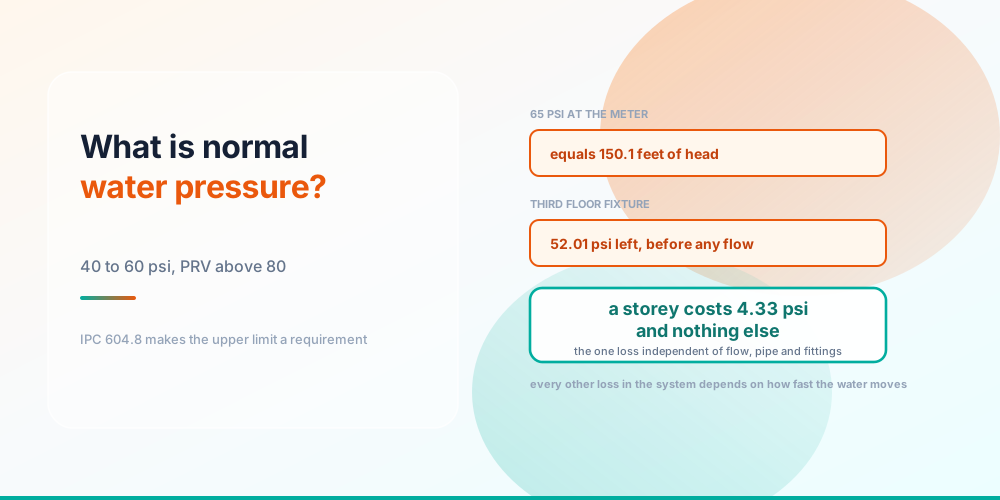
Normal Water Pressure for a House: 40 to 60 psi, and Why Height Costs 4.33
65 psi is 150 feet of head. Each storey costs exactly 4.33 psi whether water is moving or not — the one loss in the system independent of flow. And above 80 psi a PRV is code, not an upgrade.

- 01 Sep, 2026
Tankless Water Heater Sizing: Temperature Rise Decides Everything
The same 199,000 BTU unit gives 7.57 gpm on a Gulf-coast inlet and 4.73 gpm in a northern winter — a 37.5% loss with nothing changed but the incoming water. How to size one honestly.
- 01 Sep, 2026
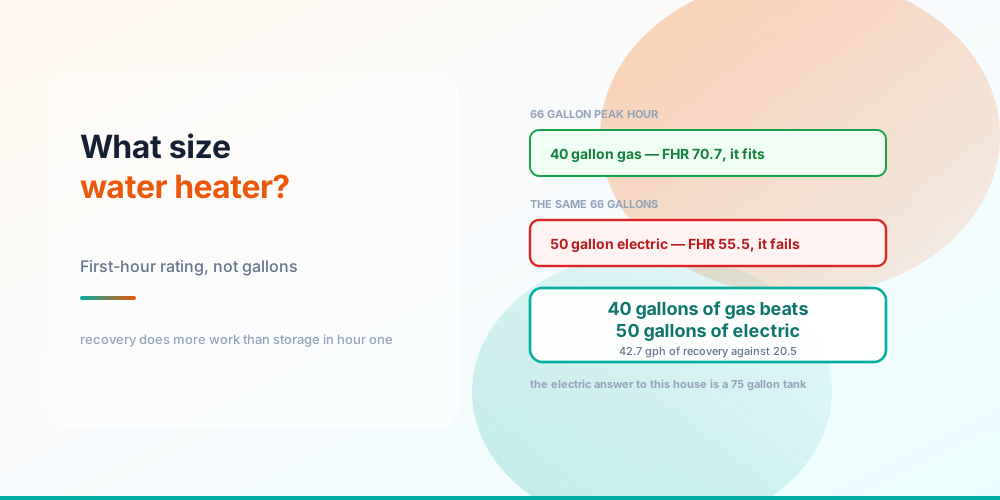
What Size Water Heater Do I Need? First-Hour Rating, Not Gallons
A 66-gallon peak hour is met by a 40-gallon gas heater — and needs a 75-gallon electric one. Why first-hour rating decides the answer and the number on the label barely matters.
- 01 Sep, 2026
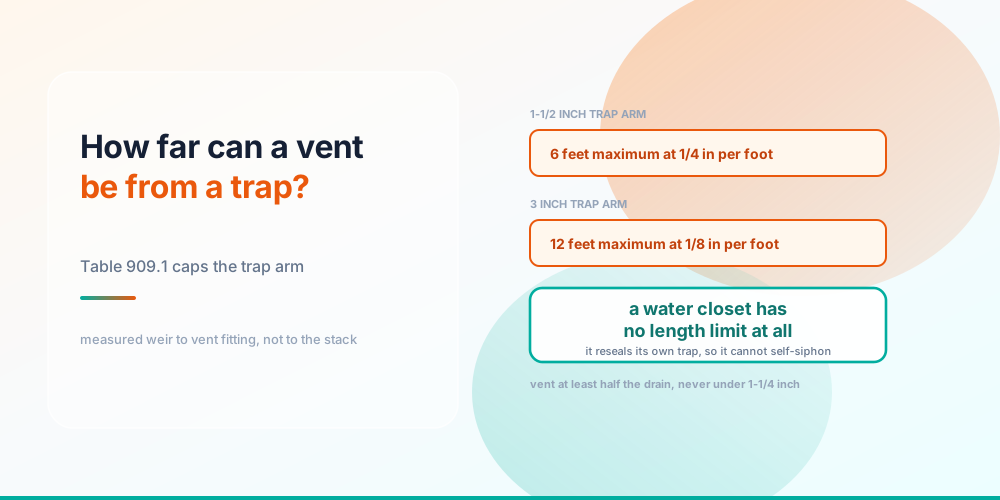
How Far Can a Vent Be From a Trap? Trap Arm Limits Explained
A 2 inch trap arm reaches 8 feet, a 3 inch reaches 12. Measured weir to vent fitting, not to the stack — and water closets have no length limit at all, because they reseal their own trap.
- 01 Sep, 2026
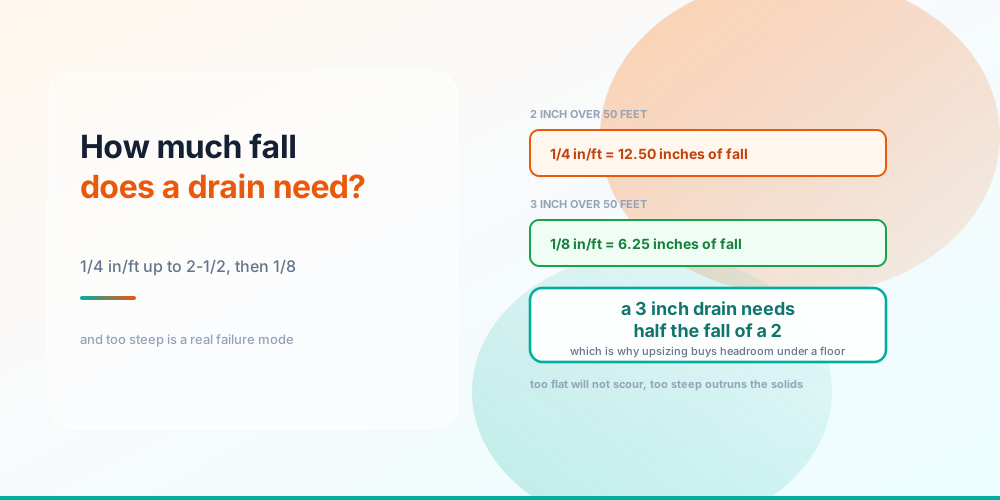
Drain Pipe Slope: How Much Fall Does a Drain Actually Need?
1/4 inch per foot up to 2-1/2 inch, 1/8 inch from 3 to 6 inch. A 3 inch drain needs exactly half the fall of a 2 inch — and too steep is a real failure mode, not a safety margin.
- 01 Sep, 2026
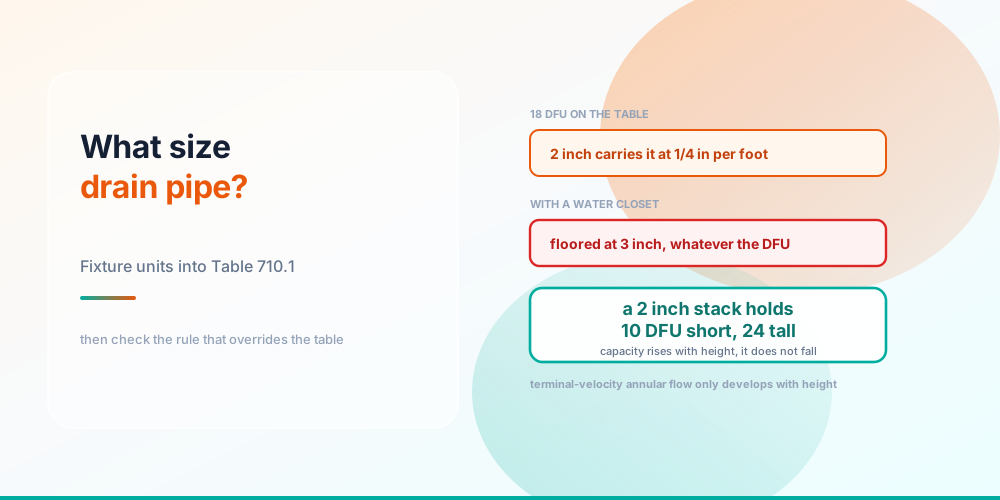
What Size Drain Pipe Do I Need? DFU, Tables 710.1, and the Rule That Overrides Them
18 DFU rides a 2 inch building drain on the table — until a toilet floors it at 3 inch. Plus the rule almost every site gets backwards: a taller stack carries more per size, not less.
- 01 Sep, 2026
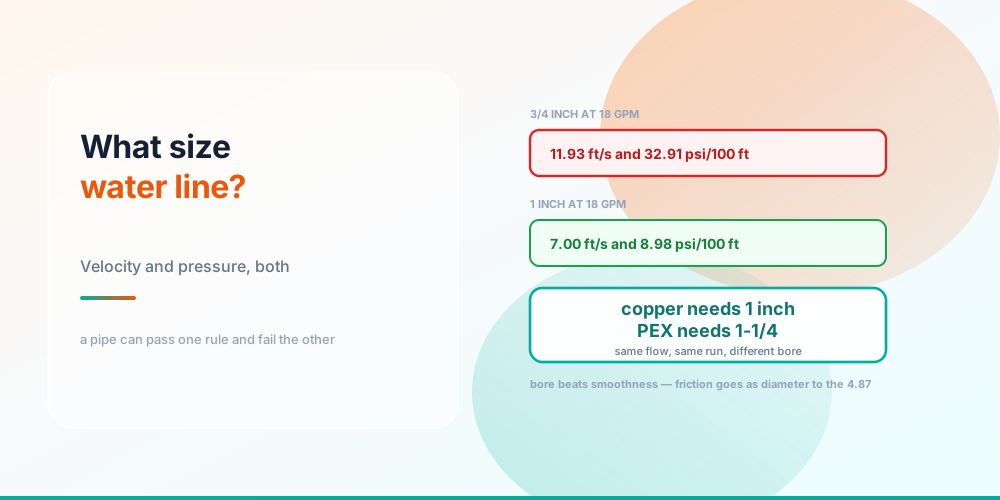
What Size Water Line Do I Need? Velocity and Pressure, Both
At 18 gpm, 3/4 inch copper runs 11.93 ft/s and loses 32.91 psi per 100 ft — it fails both rules at once. Why a water line has to clear velocity and pressure, and why PEX needs a size up on copper.
- 06 Aug, 2026
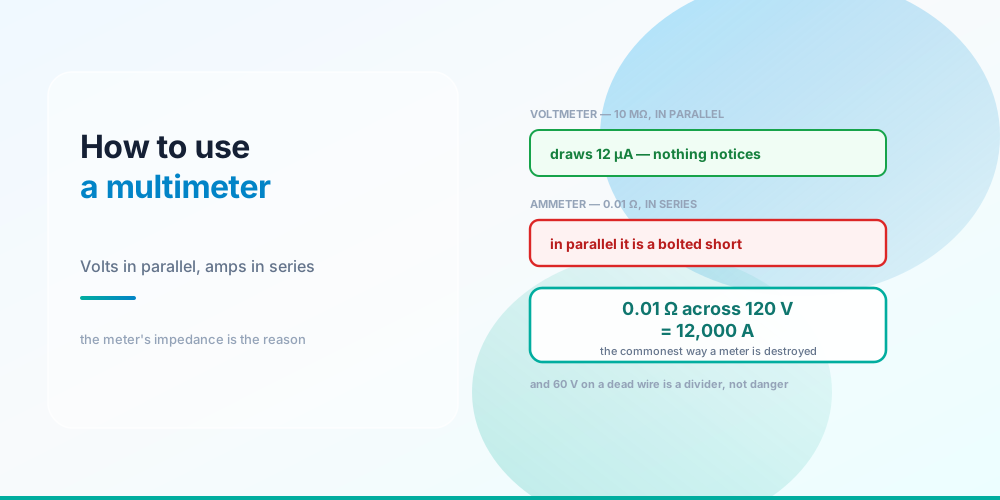
How to Use a Multimeter: Volts in Parallel, Amps in Series
A voltmeter draws 12 µA. An ammeter's shunt across 120 V is a 12,000 A short. Why the meter's own impedance decides where it goes, and why 60 V on a dead wire is a divider, not danger.

- 06 Aug, 2026
How a Circuit Breaker Works: Two Mechanisms in One Device
A bimetal strip handles overload over seconds to an hour; a solenoid clears a short in about 17 ms. Why a breaker protects the wire rather than the appliance, and why 20 A isn't its only rating.
- 06 Aug, 2026
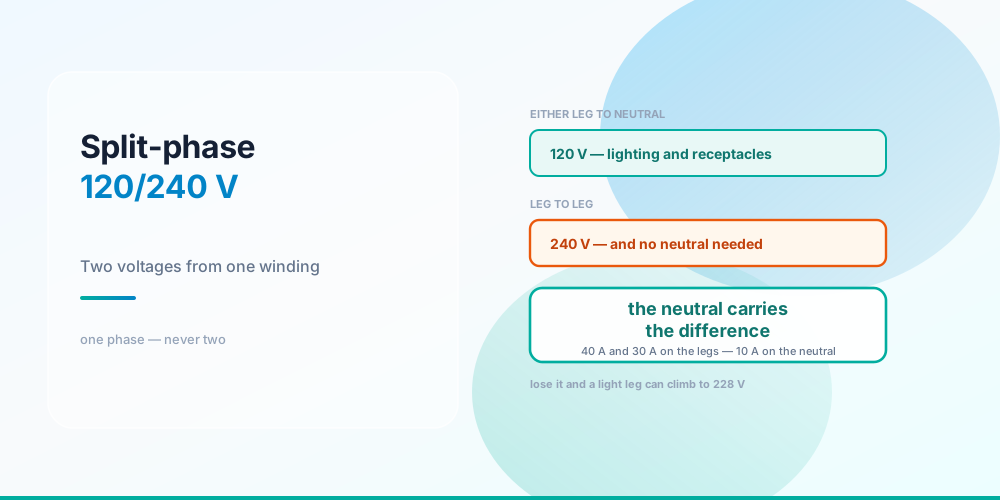
Split-Phase 120/240 V: Where Two Voltages Come From One Winding
One centre-tapped transformer gives a house both voltages. Why the neutral carries the difference, why 240 V loads need no neutral, and why an open neutral pushes a light leg to 228 V.