
TradesQuote Blog
- 04 Sep, 2026
Heat Pump Water Heaters: Great Efficiency, Slow Recovery
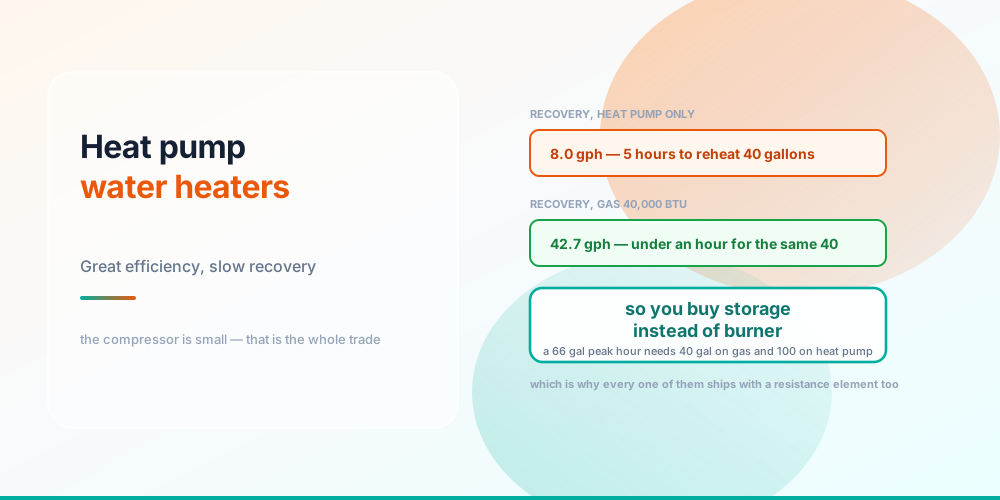
In heat-pump-only mode it recovers 8.0 gallons an hour against gas at 42.7. The same peak hour needs a 40 gallon gas tank or a 100 gallon heat pump tank — you buy storage instead of burner.
- 04 Sep, 2026
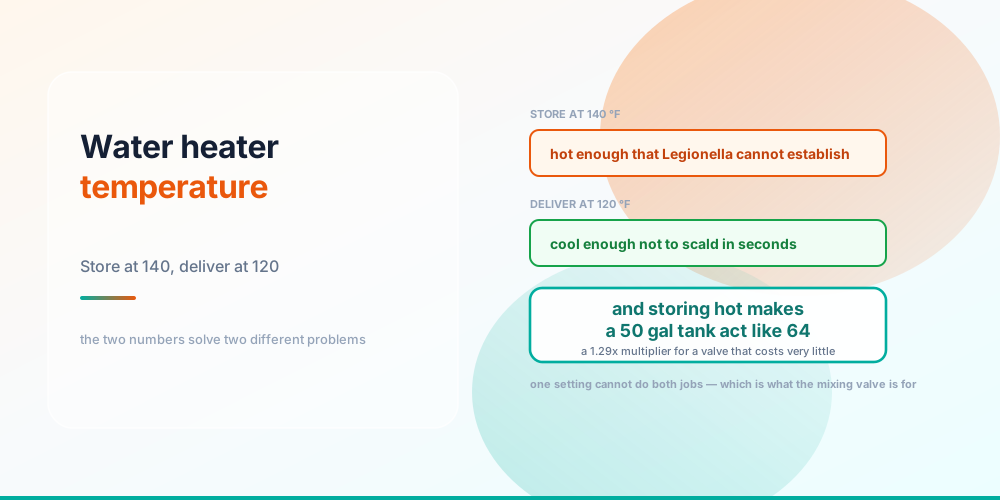
Water Heater Temperature: Store at 140, Deliver at 120, and Why
Two hazards pull in opposite directions and no single setting satisfies both. Storing at 140 and mixing down to 120 solves it — and makes a 50 gallon tank behave like 64.
- 04 Sep, 2026
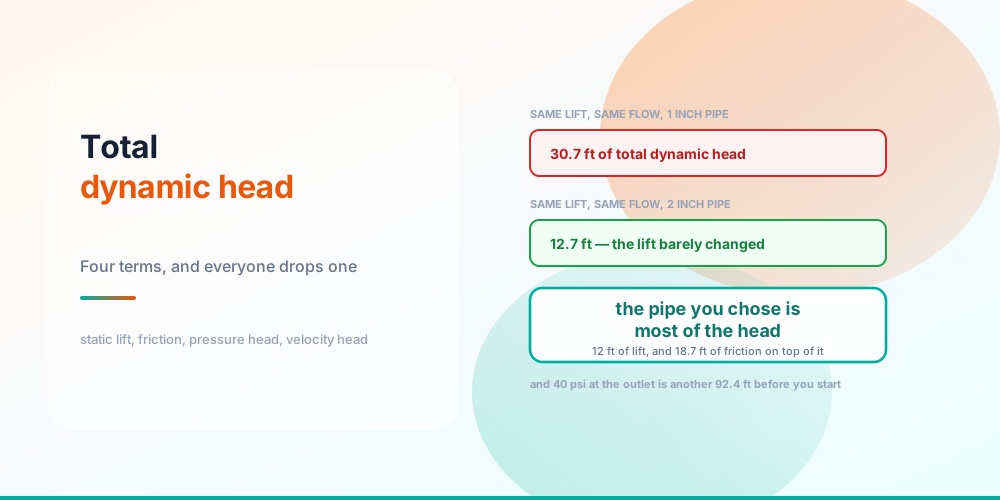
Total Dynamic Head: Static Lift, Friction, Pressure, and the Term Everyone Drops
Same lift, same flow: 1 inch discharge pipe needs 30.7 ft of head and 2 inch needs 12.7. The pipe you chose is most of the head — and a 40 psi discharge requirement is another 92.4 ft.
- 04 Sep, 2026
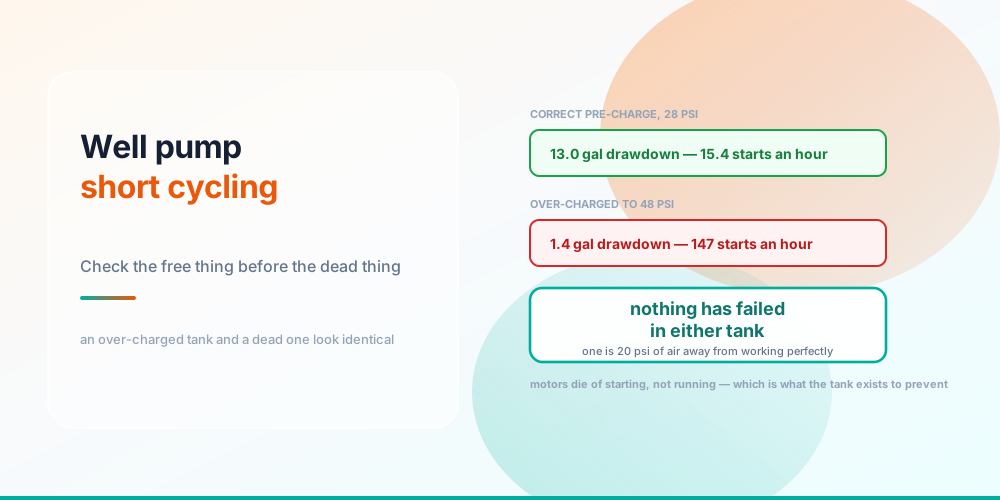
Well Pump Short Cycling: An Over-Charged Tank Looks Exactly Like a Dead One
Twenty psi of surplus air takes a pump from 11.5 starts an hour to 110 — with nothing broken. Check the free thing before the dead thing, because the two failures are indistinguishable.
- 04 Sep, 2026
Do I Need a PRV? IPC 604.8 and the Expansion Tank It Drags With It
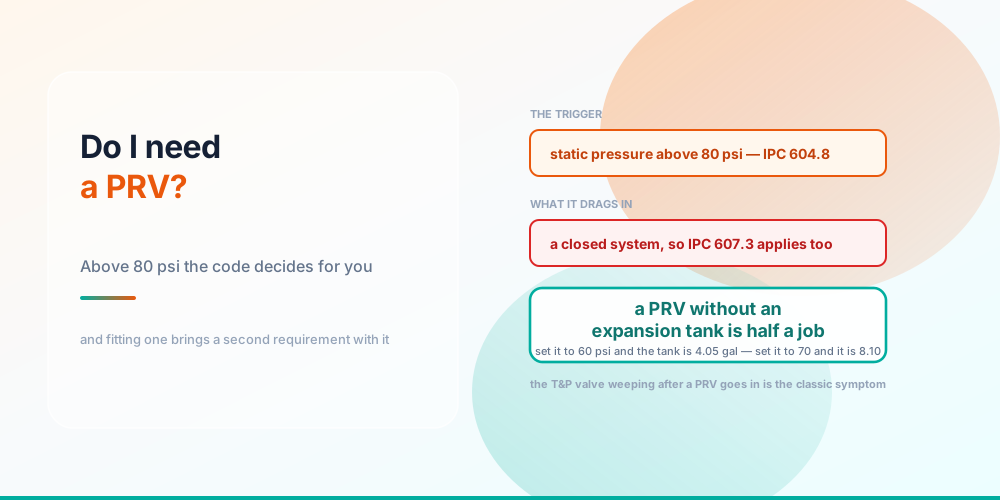
Above 80 psi the code decides for you. What most people are not told is that fitting one closes the system — and where you set it then triples or thirds the expansion tank it now requires.
- 04 Sep, 2026
Sizing a Rainwater Harvesting System: The Dry Spell, Not the Roof
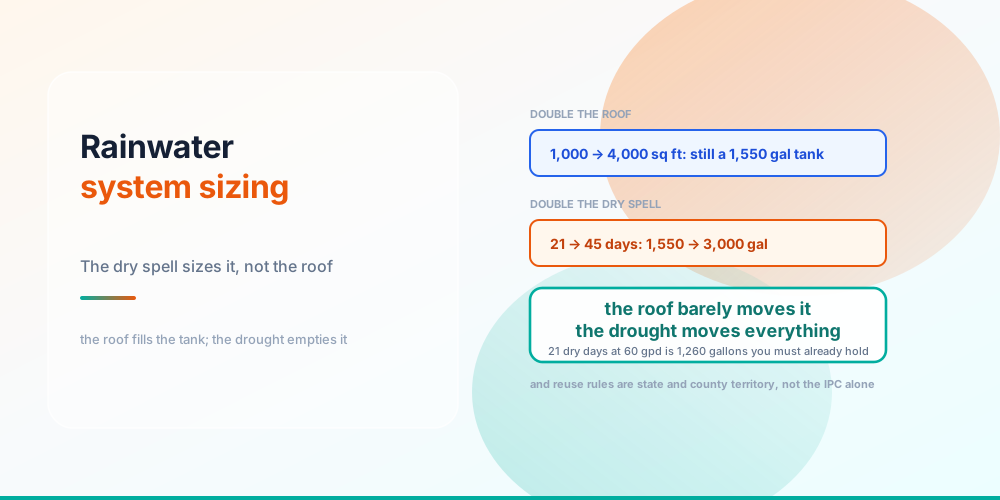
Quadruple the roof and the tank does not move. Extend the dry spell and it more than doubles. Why the drought sizes a cistern, and what it means when yield rather than demand governs.
- 04 Sep, 2026
Roof Runoff: How Much Water a Storm Actually Delivers
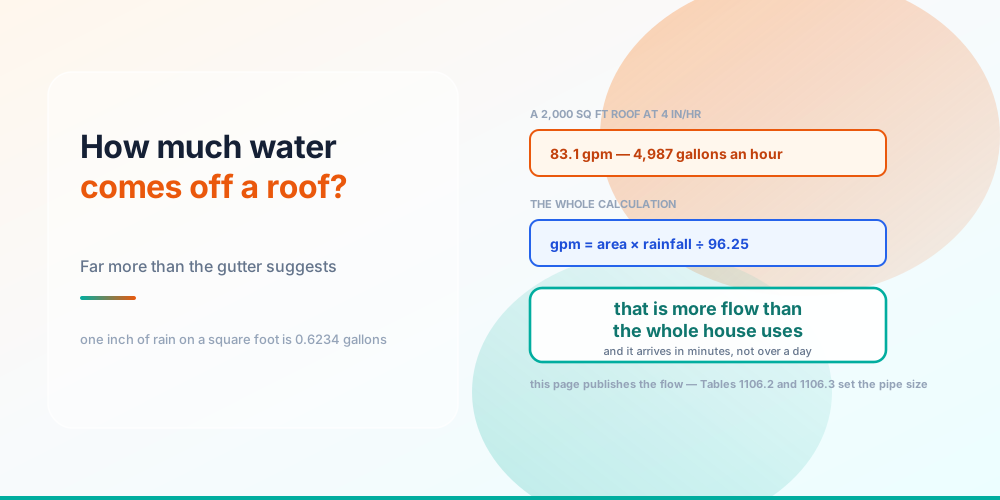
A 2,000 sq ft roof in a 4 in/hr storm sheds 83.1 gpm — about twenty-one times what the house uses at peak. The whole calculation is one divisor, and that divisor is three unit conversions.
- 04 Sep, 2026
Air Admittance Valves: Where They Are Legal and Where They Are Not
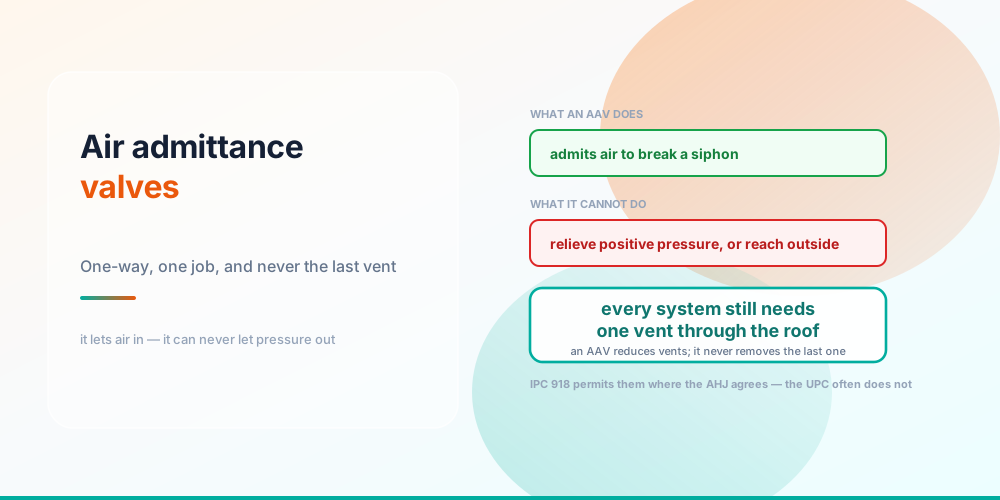
An AAV admits air and nothing else. It seals harder as pressure rises, which is why it can reduce the number of vents in a system and can never replace the one that reaches open air.
- 04 Sep, 2026
Why Is My Drain Gurgling? It Is Almost Always the Vent
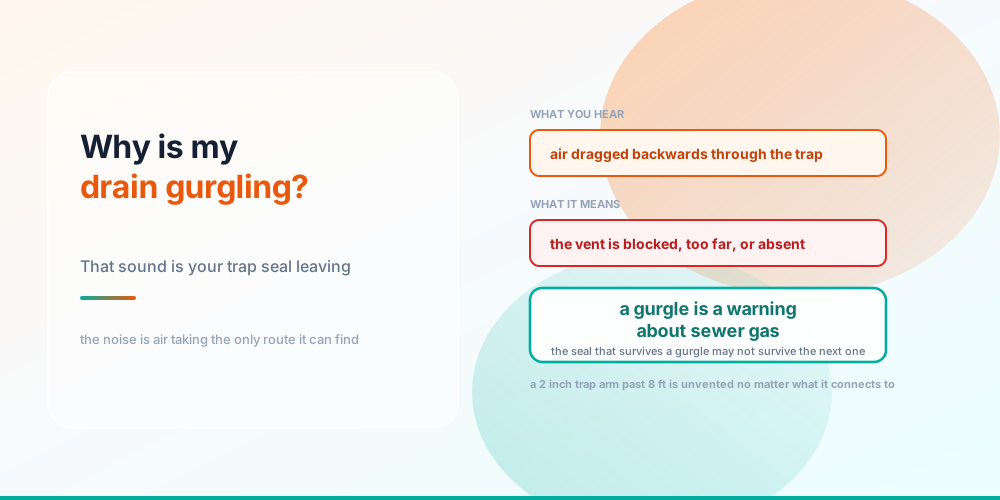
That sound is air being dragged through your trap seal because the vent could not supply it. What gurgles and when narrows the fault — and why a 2 inch trap arm is unvented past 8 feet.

- 04 Sep, 2026
How Many Fixtures Can a 3/4 Inch Line Serve?
Fewer than almost anyone guesses — about six fixture units on velocity alone, and fewer once the run is long enough to matter. Why the question needs a length attached before it has an answer.
- 04 Sep, 2026
Friction Loss in Water Pipes: Hazen-Williams Without the Nomograph
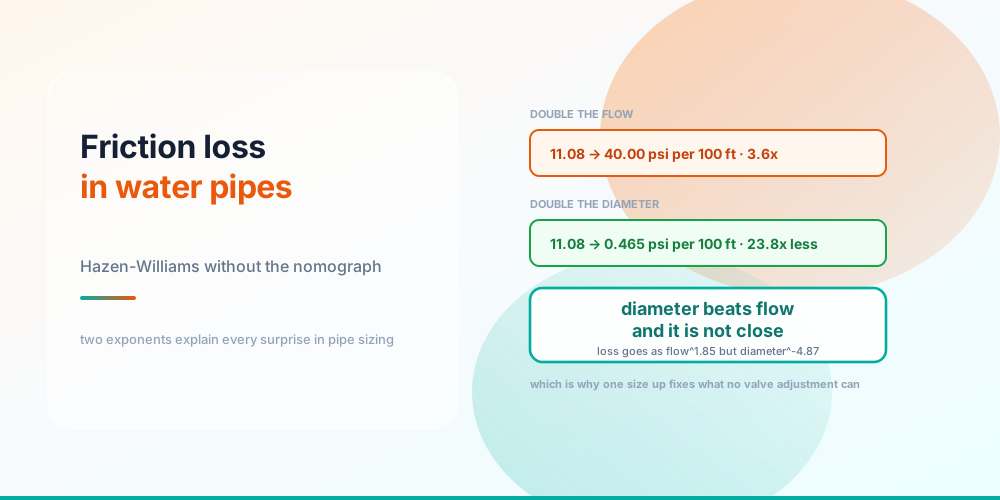
Two exponents explain every surprise in pipe sizing. Double the flow and friction goes up 3.6x; double the diameter and it falls 23.8x. Plus the fittings a tape measure never sees.
- 04 Sep, 2026
Water Velocity in Pipes: The 8 and 5 ft/s Limits Nobody Can Cite
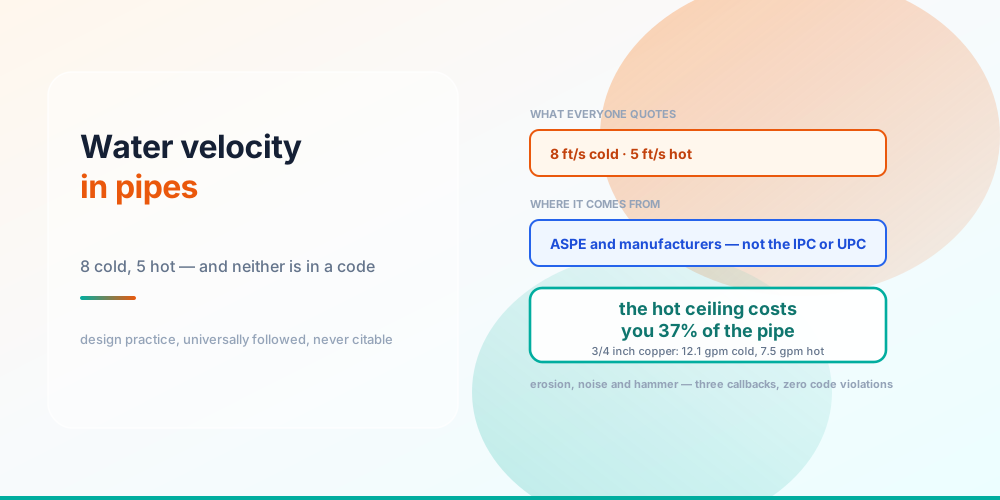
Everyone quotes 8 ft/s cold and 5 ft/s hot as though it were code. It is not in the IPC or the UPC — it is design practice, and knowing that changes how you argue about it.

- 03 Sep, 2026
IPC vs UPC: Which Code Applies, and Where They Actually Diverge
Two model plumbing codes, and the state you are in decides which one you answer to. Where they agree, where they genuinely diverge, and exactly which published numbers you need to re-check.
- 03 Sep, 2026
Backflow Prevention: No Vacuum Breaker Stops Backpressure
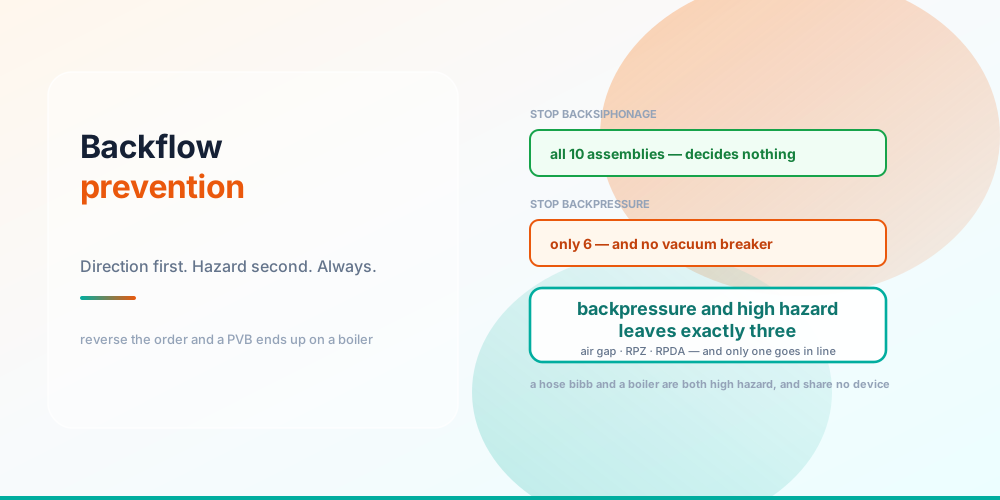
All ten assemblies stop backsiphonage, so that column decides nothing. Only six stop backpressure and only three of those are rated for high hazard — which is the whole selection problem in one sentence.

- 03 Sep, 2026
Plumber Hourly Rate: Utilisation Moves It More Than Wage Does
A $32 an hour plumber bills $117.44 — 3.67x the wage. Not greed: it is burden, overhead, and the 680 paid hours a year that nobody buys. And utilisation moves the rate further than a pay rise does.
- 03 Sep, 2026
How to Estimate Plumbing Jobs: Markup Is Not Margin
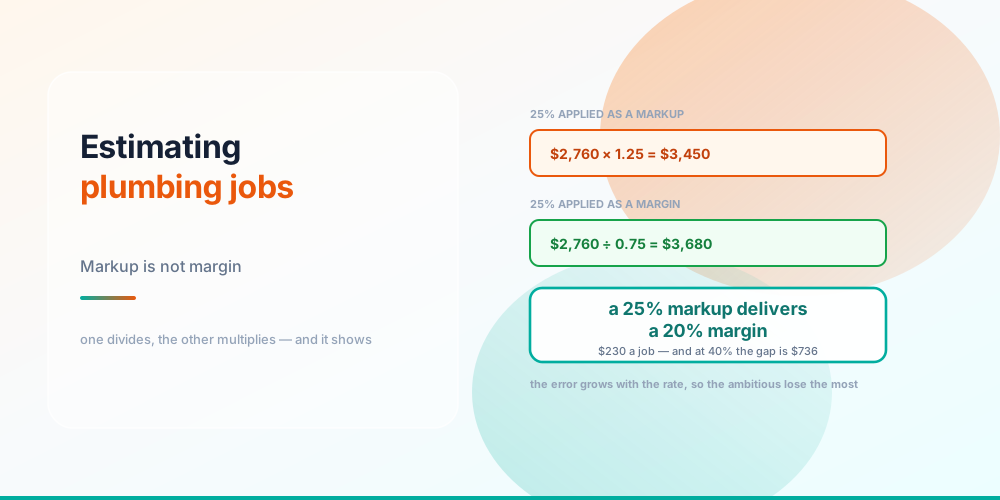
A 25% markup delivers a 20% margin, and on a $2,760 job that is $230 left on the table. The build-up in order, why overhead is a separate line, and the division that turns break-even into a price.
- 03 Sep, 2026
Water Heater Replacement Cost: The Upgrades Turn a Swap Into a Project
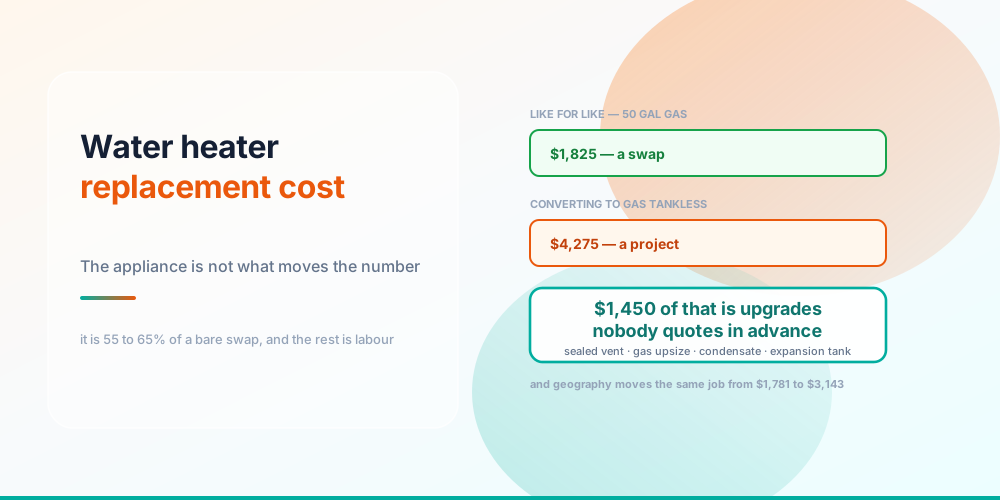
A like-for-like 50 gallon gas swap runs about $1,825. The same house converting to gas tankless runs $4,275 — and $1,450 of that is upgrades nobody quotes until the old unit is out.
- 03 Sep, 2026
Tankless vs Tank: Simultaneity, Not Capacity, Is the Real Difference
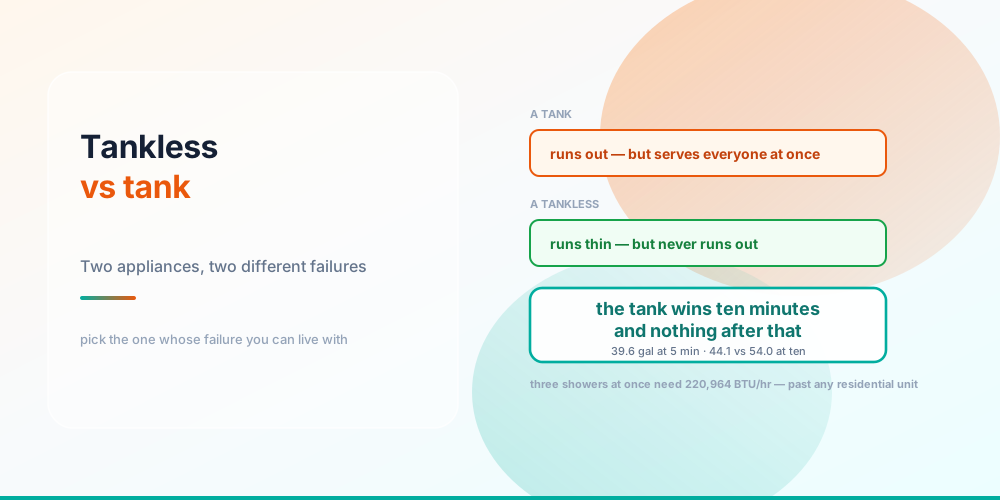
A tankless never runs out — it runs thin. A tank never runs thin — it runs out. Which failure you can live with is the actual decision, with the crossover computed at ten minutes.
- 03 Sep, 2026
Thermal Expansion Tank Sizing: The Pre-Charge Matters More Than the Tank
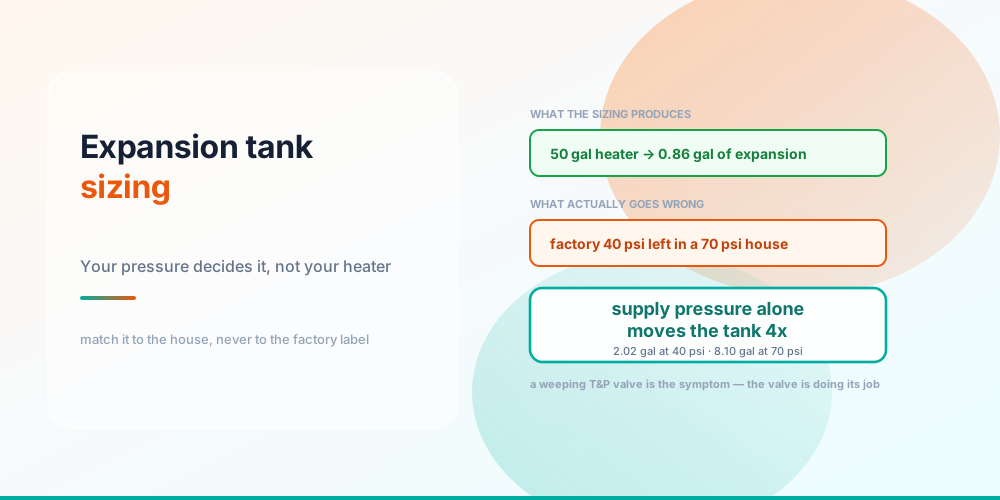
A 50 gallon heater makes 0.86 gallons of expansion. Whether that needs a 2 gallon tank or an 8 gallon one is decided by your supply pressure, not your heater — a 4x swing from one number nobody checks.
- 03 Sep, 2026
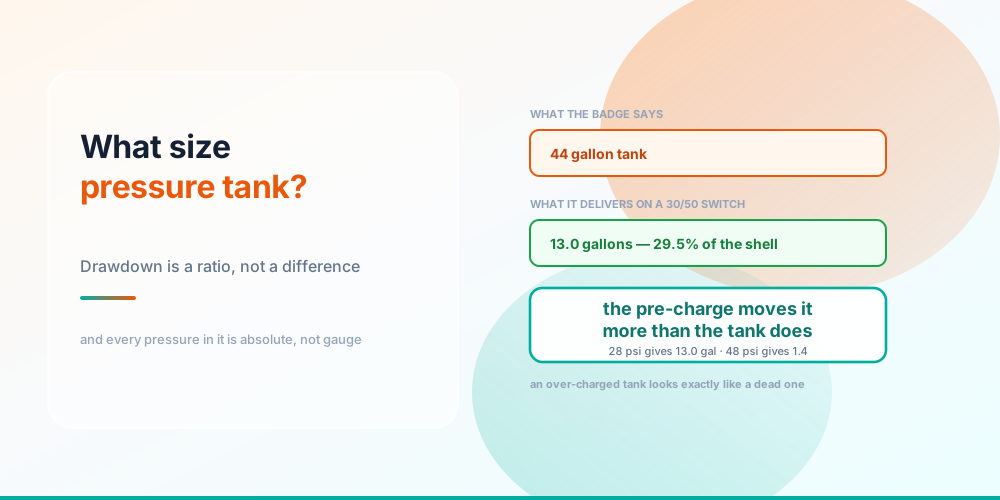
What Size Well Pressure Tank? Drawdown Is a Ratio, Not a Difference
A 44 gallon pressure tank delivers 13 gallons. Drawdown is a fraction of the shell set by absolute pressures, and the pre-charge moves it more than the tank size does — worked through with the numbers.